Kraken Gets a Fed Account — Then Congress Asks Why
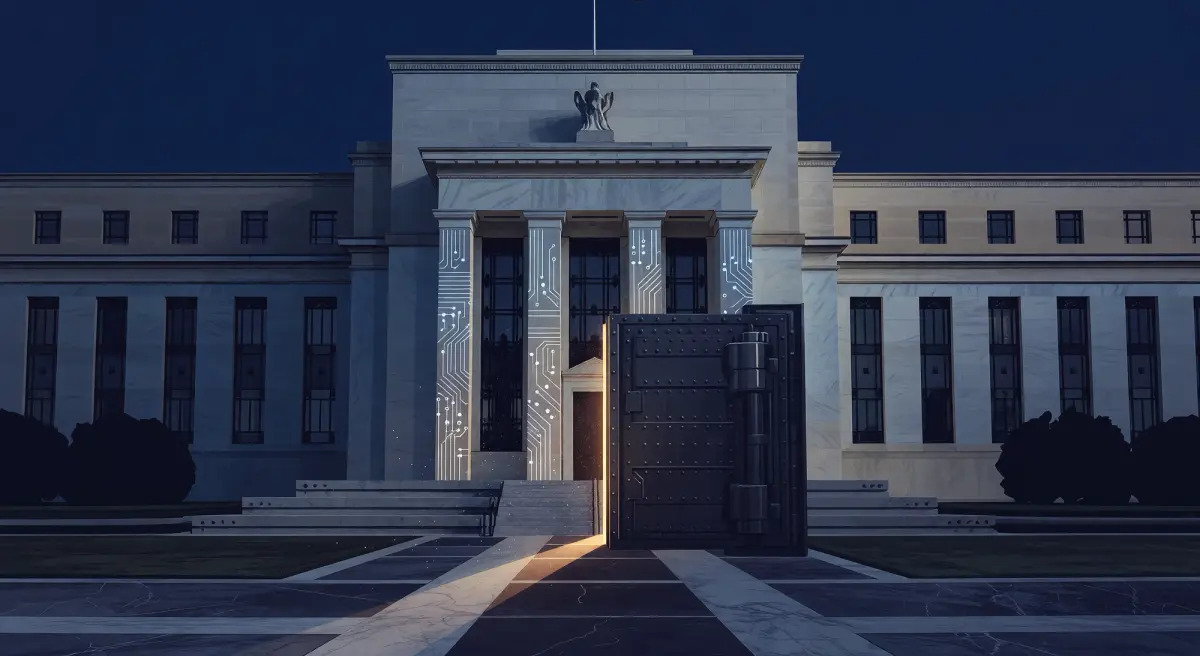
The First Crypto Firm Inside the Federal Reserve System
On March 4, 2026, the Federal Reserve Bank of Kansas City approved a limited-purpose account for Payward Financial d/b/a Kraken Financial — making Kraken the first cryptocurrency firm to secure direct access to a Federal Reserve master account. Twenty-two days later, Congresswoman Maxine Waters, the ranking member of the House Financial Services Committee, sent a letter to Kansas City Fed President Jeff Schmid demanding a written response by April 10, 2026.
This is not a story about whether Kraken is a good actor. It is a story about whether the Federal Reserve's regional bank structure can approve direct access to the payments infrastructure for a digital assets firm without coordinating with Congress, the Federal Reserve Board of Governors, or other federal regulators — and what that precedent means for every fintech startup watching from the sidelines.
Here is what happened, why it matters, and what cryptocurrency regulation looks like on the other side of this decision.
What Kraken Actually Got — and What It Did Not
The approval is more limited than the headlines suggest. Kraken Financial is chartered as a Wyoming Special Purpose Depository Institution (SPDI), operating on a full-reserve basis — meaning it holds liquid assets equal to or exceeding 100% of client fiat deposits. That structure was central to the Kansas City Fed's rationale for approval.
But the account comes with significant restrictions. Under the limited-purpose account structure:
- Kraken cannot earn interest on reserve balances
- Kraken cannot access the Federal Reserve's emergency lending facilities (the discount window)
- Kraken cannot access FedNow or ACH payment systems
- The account is approved for an initial term of one year
- Kraken Financial was classified as a Tier 3 institution — the Federal Reserve's strictest level of review
The real question is not whether Kraken got a master account. It is what a Tier 3, one-year, interest-free, discount-window-excluded account actually means for the firm's business model — and whether the restrictions are durable or a starting point for expansion.
The distinction that matters here: a traditional bank master account and Kraken's limited-purpose account are not the same instrument. One provides full access to the Federal Reserve's payment rails and emergency facilities. The other provides a narrow, heavily supervised foothold. Conflating the two overstates Kraken's position and understates the regulatory risk that remains.
Why Waters' Letter Is More Than Political Theater
Congresswoman Waters' March 26, 2026 letter raises questions that go beyond partisan positioning. The core concerns are structural.
The Coordination Question
Waters asked whether the Kansas City Fed coordinated the approval with the Federal Reserve Board of Governors or other federal agencies before granting access. The Fed has not publicly disclosed the answer. That silence matters. The Federal Reserve's regional bank structure gives individual Reserve Banks meaningful independent authority — but the Board of Governors sets system-wide policy. If the Kansas City Fed acted unilaterally on a decision with system-wide implications for cryptocurrency regulation and fintech compliance, that is a governance question with real consequences regardless of which party controls the House.
The Timing Question
The Federal Reserve Board issued a Request for Information on a payment account prototype in December 2025, with the comment period closing February 6, 2026. The Kansas City Fed approved Kraken's account on March 4, 2026 — less than four weeks after that comment period closed, and before the Board had publicly acted on the RFI. Whether Kraken's account fits within the payment account framework or represents a separate category entirely remains unresolved.
The message is unmistakable: the approval process moved faster than the policy framework designed to govern it. That sequencing will define the legal and political debate for months.
What This Means for Fintech Startups Watching the Kraken Decision
Every fintech startup and digital assets firm that has spent years trying to access payment infrastructure through indirect channels — correspondent banking relationships, money transmitter licenses, third-party processors — is watching this case closely. The Kraken approval establishes that a Wyoming SPDI can, under the right conditions, obtain direct Federal Reserve access. That is a significant data point.
But the compliance implications cut both ways.
The Opportunity
Direct Fed access eliminates counterparty risk from correspondent banking relationships and reduces settlement friction. For a full-reserve institution holding 100% liquid assets against client deposits, the theoretical case for Fed access is coherent. The Wyoming SPDI charter was designed precisely to create a regulatory pathway for this kind of institution.
The Risk
Kraken's Tier 3 classification means the Federal Reserve will apply its strictest supervisory scrutiny. A one-year term means the account must be renewed — and renewal is not guaranteed, particularly if the political environment shifts or if the Board of Governors decides to assert authority over regional bank approvals of this type. Any fintech startup that models its business around Fed access it does not yet have is building on an uncertain foundation.
Fintech compliance programs for firms pursuing this path need to account for the possibility that the regulatory framework governing these accounts will be rewritten before the first renewal date arrives.
Key Takeaways for Digital Assets Firms and Their Counsel
- Direct Fed access is now a proven pathway, not a theoretical one. Kraken Financial's approval on March 4, 2026 establishes that a Wyoming SPDI can obtain a Federal Reserve master account — but the Tier 3 classification and one-year term mean the pathway is narrow and heavily conditioned.
- The account restrictions define the business model. No interest on reserves, no discount window access, no FedNow or ACH — these are not minor footnotes. Any digital assets firm modeling revenue or liquidity around a Fed account needs to build those restrictions into its financial projections from day one.
- Congressional oversight is now active. Waters' April 10, 2026 response deadline has passed. The House Financial Services Committee's engagement on this issue will shape the legislative environment for cryptocurrency regulation regardless of which party holds the gavel after the next election.
- The coordination question between the Kansas City Fed and the Board of Governors is unresolved. If the Board asserts authority to review or reverse regional bank approvals of this type, the legal basis for Kraken's account could be challenged. Firms building compliance frameworks around this precedent should monitor Board guidance closely.
- The Wyoming SPDI charter is the structural key. Full-reserve operations and state-level chartering were central to the approval rationale. Fintech startups pursuing a similar path should evaluate whether their charter and balance sheet structure can satisfy the same threshold — before investing in a Fed account application.
The Broader Precedent and What Comes Next
The Kraken decision is the first data point in what will become a body of precedent governing digital assets firms' access to Federal Reserve infrastructure. The real question is not whether Kraken deserved the account. It is whether the approval process — a regional Reserve Bank acting weeks after a Board-level RFI comment period closed, without publicly disclosed coordination — is the right model for decisions of this magnitude.
Waters' letter, whatever its political motivation, surfaces a legitimate institutional question: who decides which non-bank financial institutions get direct access to the Federal Reserve system, and under what framework? The answer will define fintech compliance obligations and competitive dynamics for the next decade.
FinTech Law works with digital assets firms, fintech startups, and investment advisers navigating the intersection of payments infrastructure, cryptocurrency regulation, and federal oversight. If your firm is evaluating a Wyoming SPDI charter, a Federal Reserve account application, or the compliance implications of the Kraken precedent, we would welcome the conversation. Visit fintechlaw.ai or reach out directly at fintechlaw.ai/contact.
---
*This blog post is for informational purposes only and does not constitute legal advice. No attorney-client relationship is formed by reading this content. If you need legal advice, please contact a qualified attorney.*