Nadella's 'Token Capital' Is a Diligence Problem, Not a Buzzword
What Nadella Actually Said — and Why Founders Should Read It Twice
On June 14, 2026, Satya Nadella published an essay on X titled 'A frontier without an ecosystem is not stable.' The post exceeded 28 million views within days. Most coverage treated it as another CEO meditation on the AI economy.
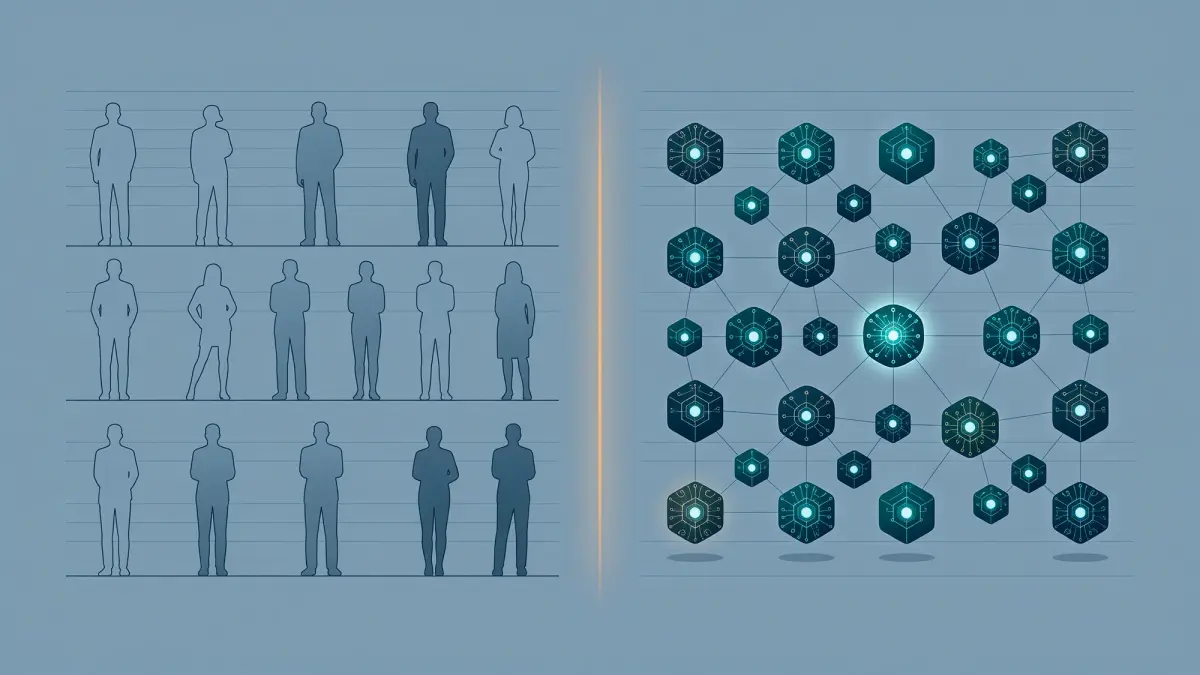
But here is the part the headlines are missing. Buried inside the essay is a balance-sheet idea with real legal consequences. Nadella drew a line between two kinds of capital: 'human capital' — employee knowledge, judgment, and relationships — and 'token capital', defined as the AI systems, models, and capabilities a company builds and owns, distinct from what it rents from an external provider.
That distinction — own versus rent — is not a marketing slogan. It is a diligence question. And it is one most early-stage founders cannot answer cleanly today.
Here is what Nadella said, why it matters for your cap table and your next financing, and what to do before an investor asks.
The Distinction That Matters: Owning a Model Versus Renting One
Every startup building on AI sits somewhere on a spectrum. On one end, you rent everything — your product is a thin wrapper around an external provider's API. On the other, you own the model weights, the training data rights, and the inference stack.
Nadella's framing makes this spectrum a capital-classification problem. Microsoft itself illustrated the point at Build 2026, held June 2–3 in San Francisco. The company unveiled MAI-Thinking-1, its first in-house reasoning model — 35 billion active parameters, trained without OpenAI data, on commercially licensed enterprise data.
Read that sentence again. Microsoft, the largest backer of OpenAI, built its own model on data it can document the provenance of. That is the most expensive company in the world converting rented token capital into owned token capital.
Why provenance is the hinge
The value of owned token capital depends entirely on whether you can prove what went into it. A model is only an asset if you can answer three questions:
- What data trained it? Licensed, scraped, customer-derived, or synthetic — each carries a different risk profile.
- Who owns the outputs? Your provider's terms may claim rights you assumed were yours.
- Can the capability survive a provider change? If your provider deprecates a model or triples its price, does your product still exist?
Microsoft answered the first question explicitly by training on commercially licensed data. Most startups cannot.
Token Capital Meets the Cap Table: The Provenance Gap in Diligence
This is where the essay stops being thought leadership and starts being a legal exposure. When you raise a round, sophisticated investors run intellectual-property diligence. The classic question was always 'what code do you own?' The AI-era question is harder: 'what model capability do you own, and can you prove its provenance?'
The representation founders sign without thinking
Nearly every financing and acquisition agreement includes IP ownership representations and warranties. A founder who represents that the company 'owns its core technology' while that technology is a fine-tuned layer on a rented foundation model — trained partly on data scraped under unclear terms — has made a representation they cannot fully support.
That gap does not disappear. It surfaces at the worst possible moment: in an acquirer's confirmatory diligence, or in a down-round where investors are looking for reasons to reprice.
What 'rent' actually exposes
Renting is not wrong. It is often the right call. But renting carries documented dependencies that belong in your disclosure schedules:
- Provider terms of use that may grant the provider rights in your fine-tuning data
- Pricing and availability terms that can change with little notice
- Data-residency and confidentiality commitments you have made to your own customers that the provider may not honor
Microsoft's own $37 billion AI annualized run rate, growing 123% year-over-year, is a measure of how much token capital the rest of the market is renting from a single provider. Concentration like that is precisely the dependency a diligence team will probe.
What To Do Before an Investor Asks
The fix is not to build your own foundation model. It is to document your token capital with the same rigor you apply to your equity. Treat model provenance as a corporate record, not an engineering footnote.
Build a provenance file now
First, map your model dependency stack. Document every external model, the provider, the contract terms governing ownership of inputs and outputs, and what happens on deprecation or price change. This is your token-capital ledger.
Second, audit your training and fine-tuning data rights. For any data you used to train or tune a model, record the source and the legal basis. Licensed, customer-consented, public-domain, or synthetic. If you cannot identify the basis, flag it before diligence does.
Third, align your customer contracts with your provider contracts. If you promise customers confidentiality or data isolation that your upstream provider does not contractually guarantee, you have a representation mismatch. Close it.
Fourth, draft your IP representations to match reality. Do not represent ownership of capabilities you rent. Carve out licensed components in your disclosure schedules. A precise, modest representation survives diligence. An aggressive one becomes a post-closing claim.
The reframe
Nadella's argument is that a frontier without an ecosystem is not stable. The corporate-law translation is simpler: a valuation built on token capital you cannot document is not stable either. Provenance is what converts a capability into an asset a buyer will pay for.
Key Takeaways
- Token capital is a balance-sheet concept, not a slogan. Nadella's June 14, 2026 essay reframes owned-versus-rented AI capability as a capital-classification question, which maps directly onto IP diligence.
- Microsoft is converting rented token capital into owned token capital. MAI-Thinking-1, with 35 billion active parameters trained on commercially licensed data without OpenAI data, is the largest example of a company prioritizing documented provenance.
- Provenance is the hinge between a capability and an asset. A model you cannot trace to its data and ownership terms is a liability in diligence, not a moat.
- IP representations are where the gap surfaces. Founders who represent ownership of rented capabilities create post-closing exposure that resurfaces in acquisitions and down-rounds.
- The fix is documentation, not a new model. Build a token-capital ledger now: dependency map, data-rights audit, contract alignment, and accurate representations.
How FinTech Law Helps
The startups that win the next financing cycle will be the ones that can answer 'what AI capability do you own, and can you prove it?' without flinching. That answer is built in your contracts and your records long before the term sheet arrives.
This is the model we are building at FinTech Law: an AI-native practice that understands both the technology and the corporate-law consequences of how it is licensed, trained, and represented. We help founders structure model-dependency documentation, align customer and provider contracts, and draft IP representations that survive diligence.
If your company is raising capital and building on AI, we would welcome the conversation. Contact us to schedule a consultation.
This blog post is for informational purposes only and does not constitute legal advice. No attorney-client relationship is formed by reading this content. If you need legal advice, please contact a qualified attorney.
Verified Sources
Verified citations
- Primary source: Original report
- Secondary source: Independent verification