Washington Sues Kalshi: The Preemption Fight Reshaping Prediction Markets
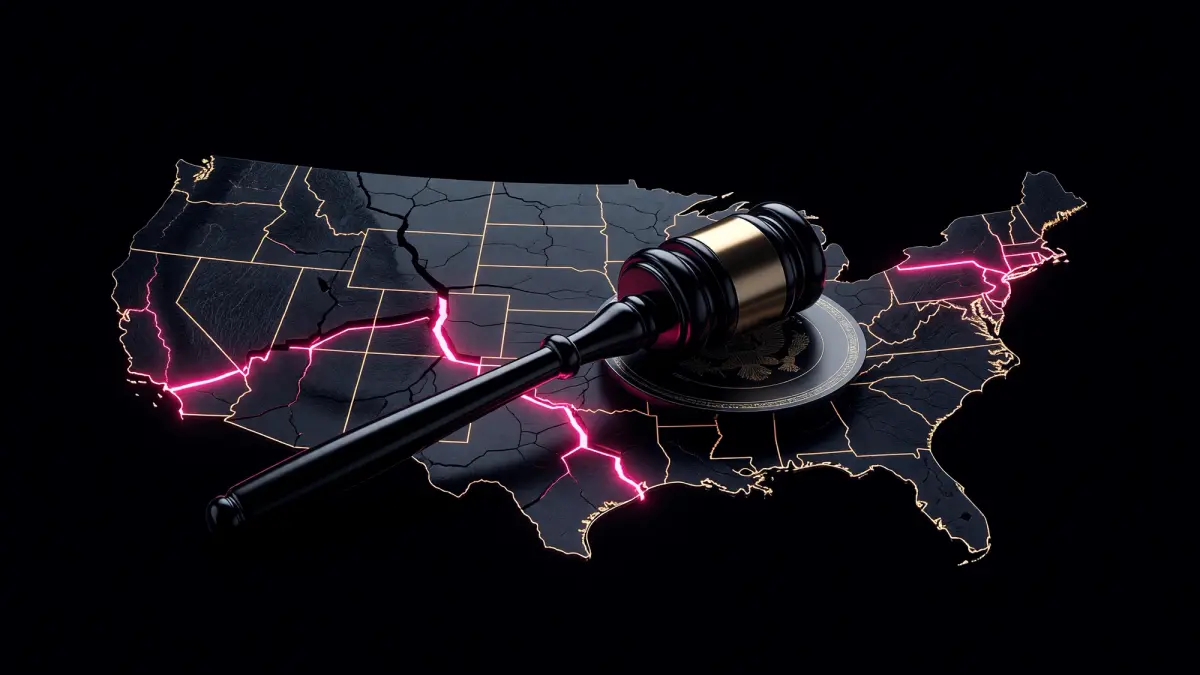
A CFTC License Did Not Stop Washington From Calling Kalshi Illegal Gambling
On March 27, 2026, Washington Attorney General Nick Brown filed a civil lawsuit against KalshiEX LLC in King County Superior Court, alleging Kalshi operates an unlicensed online betting platform in violation of the Washington Gambling Act, the Consumer Protection Act, and the Recovery of Money Lost at Gambling Act. As CoinDesk reported, the filing landed as states across the country ramped up legal pressure against prediction markets.
This is not a story about a rogue offshore operator. Kalshi is a Designated Contract Market regulated by the Commodity Futures Trading Commission. It carries a federal license to list event contracts.
Here is the part most coverage buries. The fight is not really about gambling. It is about federal preemption — whether a CFTC license immunizes an event-contract platform from state law. On July 20, 2026, a Washington judge answered that question, and the answer should worry every prediction market betting on federal cover.
The Preemption Question That Decides Everything
Kalshi's entire defense rests on one legal theory: the Commodity Exchange Act grants the CFTC exclusive jurisdiction over event contracts traded on registered DCMs, and that exclusivity preempts state gambling law. If the theory holds, states cannot touch Kalshi regardless of what their gambling statutes say.
On July 20, 2026, King County Superior Court Judge John F. McHale rejected that argument. In granting Washington a preliminary injunction, the court found the state likely to prove Kalshi's event contracts constitute illegal gambling and explicitly declined to hold that the Commodity Exchange Act preempts Washington gambling law.
Why this matters for market structure
Prediction markets have marketed themselves as a new asset class — regulated financial instruments, not wagers. That framing depends entirely on federal preemption doing the heavy lifting. Strip away preemption, and a sports contract is functionally indistinguishable from a bet under state law.
- A federal DCM license does not automatically clear state gambling statutes.
- The same contract can be a lawful commodity federally and illegal gambling in a given state.
- Platforms face a patchwork of 50 state regimes layered on top of CFTC oversight.
That is a fundamentally different risk profile than the one Kalshi's $22 billion valuation assumed.
The States Are Not Acting Alone — And Neither Is the CFTC
Washington is one front in a coordinated multi-state offensive. The pattern moved from civil to criminal fast.
- Arizona went first and hardest. On March 17, 2026, Attorney General Kris Mayes filed a 20-count criminal information against KalshiEX LLC and Kalshi Trading LLC in Maricopa County Superior Court — the first criminal prosecution ever brought against a CFTC-registered prediction market operator.
- Nevada moved on the courts. On March 20, 2026, a state court granted the Nevada Gaming Control Board a temporary restraining order, followed by a preliminary injunction on April 3, 2026.
- Washington followed on March 27, 2026, with the civil action described above.
The CFTC fired back. On April 2, 2026, the CFTC and the Department of Justice filed simultaneous federal lawsuits against Arizona, Connecticut, and Illinois, seeking declaratory judgments and permanent injunctions on the theory that the Commodity Exchange Act preempts state gambling law.
That is the constitutional standoff in plain view: a federal regulator suing states to defend the very preemption theory a state judge has now rejected. The two rulings cannot both survive intact.
The Rulemaking That Could Settle It — Or Deepen the Split
The CFTC is not relying on litigation alone. On June 10, 2026, the agency issued a Notice of Proposed Rulemaking titled 'Prediction Markets; Public Interest Determinations' (RIN 3038-AF65), published in the Federal Register on June 12, 2026 at 91 Fed. Reg. 35,806. The proposal amends 17 C.F.R. Part 40 — specifically Rule 40.11 — and the comment period closed July 27, 2026.
What the numbers reveal
The stakes are enormous and heavily concentrated in sports. Kalshi's 2025 full-year trading volume reached $23.8 billion, and the same source reports that more than 90% of activity on Kalshi (and 89% of its revenue) last year was from sports betting. This is not a fringe market experimenting with novel economic hedges. It is a sports-wagering business at scale operating under a commodities framework.
A finalized federal rule blessing prediction markets would strengthen the preemption argument. But a rule cannot rewrite the Commodity Exchange Act, and a state court has already held that the statute does not displace state gambling law. The rulemaking sharpens the conflict rather than resolving it.
What Operators and Investors Should Do Now
The regulatory posture here is unusually binary. Either preemption holds and prediction markets scale nationally, or it fails and the sports-heavy volume collapses under a wall of state enforcement. Prudent operators plan for the second outcome.
Immediate steps
- Map your state-by-state exposure. Identify every state where your contracts could be characterized as wagers under existing gambling statutes, not just where you have received a cease-and-desist.
- Model a geofencing scenario. Assume you may need to exclude specific states or contract categories on short notice, as the Washington court deferred final operational terms to a later order.
- Segregate sports contracts in your risk analysis. With sports representing more than 90% of activity, that category carries the concentrated legal risk and should be stress-tested separately.
For investors
- Preemption is the entire thesis. A $22 billion valuation predicated on national scale assumes preemption survives. Diligence should price the risk that it does not.
- Watch the appellate track. Cases in the Ninth Circuit will shape whether state rulings like Washington's stand, and those outcomes are not yet decided.
- Do not treat the CFTC license as a shield. It is necessary but demonstrably not sufficient against state action.
The message is unmistakable. A federal license answers a federal question. It does not answer 50 state ones.
Key Takeaways
- A CFTC license does not preempt state gambling law — at least not yet. On July 20, 2026, a Washington judge granted a preliminary injunction against Kalshi and rejected the preemption defense outright.
- The conflict is now federal versus state, head-on. The CFTC and DOJ sued Arizona, Connecticut, and Illinois on April 2, 2026 to defend exclusive jurisdiction, while state courts move the opposite direction.
- Criminal exposure is real. Arizona's 20-count criminal information filed March 17, 2026 is the first criminal prosecution ever brought against a CFTC-registered prediction market operator.
- Sports is the concentration risk. With more than 90% of activity (and 89% of revenue) in sports contracts and $23.8 billion in 2025 trading volume, the legal fight targets the platform's core revenue.
- The pending CFTC rulemaking sharpens, not settles, the split. The June 2026 NPRM (RIN 3038-AF65) cannot rewrite the Commodity Exchange Act that a state court has already read narrowly.
Where FinTech Law Fits
Prediction markets sit at the intersection of commodities regulation, state gambling law, and constitutional preemption doctrine — a combination most firms treat as three separate silos. The Washington ruling proves why that approach fails. The real question is not whether your platform holds a CFTC license. It is whether that license survives contact with 50 state gambling regimes.
At FinTech Law, we help event-contract platforms, digital asset operators, and their investors build compliance frameworks that account for federal and state exposure simultaneously — before a state court forces the issue.
If your business relies on federal preemption to reach a national market, we would welcome the conversation. Contact us to schedule a consultation.
This blog post is for informational purposes only and does not constitute legal advice. No attorney-client relationship is formed by reading this content. If you need legal advice, please contact a qualified attorney.